A plain-English walk-through of WA’s controlled waste rules, how the disposal process actually works, and how to choose a licensed Perth carrier that protects your business.
BY FREMANTLE RESOURCE SOLUTIONS · 8 MIN READ · UPDATED MAY 2026

A plain-English walk-through of WA’s controlled waste rules, how the disposal process actually works, and how to choose a licensed Perth carrier that protects your business.
BY FREMANTLE RESOURCE SOLUTIONS · 8 MIN READ · UPDATED MAY 2026
If your business produces any kind of liquid waste — grease trap residue, oily washdown water, septic pump-outs, process waters, washdown runoff — how you dispose of it is not optional in Western Australia. The rules are strict, the responsibility sits with both you and your carrier, and getting it wrong is expensive.
The good news: the process is straightforward when you partner with a licensed carrier. This guide is what we wish every Perth business owner knew before their first pickup, written by the team at Fremantle Resource Solutions.
IN THIS GUIDE
Years Serving Perth & Fremantle
Licensed & WA-Compliant
Pickups Per Year Across Perth
SECTION 01
Liquid waste is anything that’s not solid or gaseous and could be pumped or poured. In a commercial setting that covers a much wider range of materials than most operators realise. If your site produces any of the below, you are generating liquid waste that needs to be managed correctly:
If you can pump it, pour it or strain it, chances are it falls under the WA controlled waste rules.
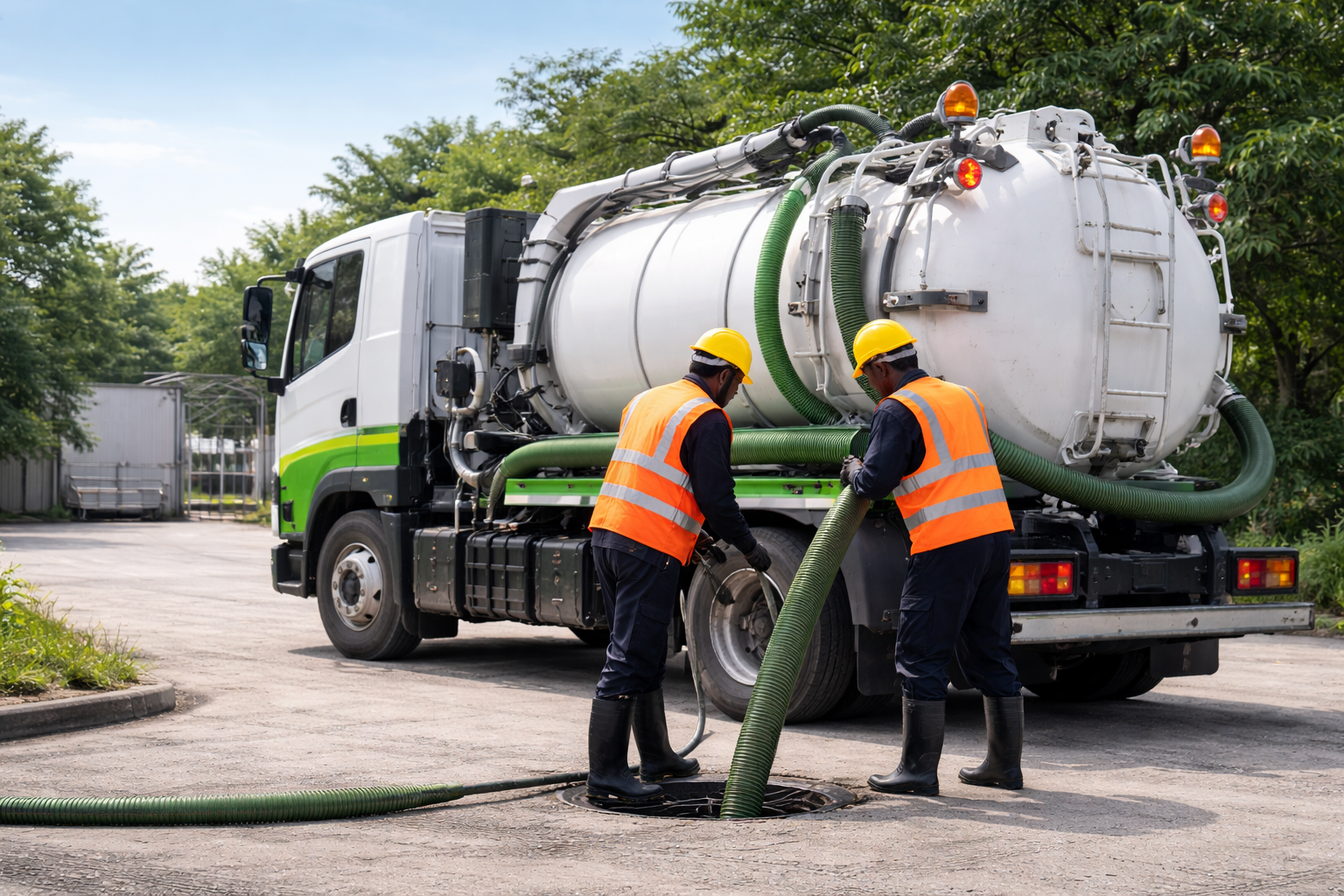
A licensed vacuum tanker collecting liquid waste at a Perth commercial site.
SECTION 02
Three reasons every Perth business needs to take liquid waste seriously, and they all have real teeth.
Western Australia regulates controlled waste under a strict licensing and tracking system administered by the Department of Water and Environmental Regulation. Both the business that generates the waste and the carrier carry legal responsibility. Fines, enforcement action and prosecution are real outcomes. The cost of compliance is always lower than the cost of a breach.
Grease and oils block stormwater systems and pollute waterways. Hydrocarbons contaminate soil and groundwater. Chemical waste wipes out aquatic ecosystems downstream. Perth’s groundwater is a critical resource, and businesses have a clear duty of care to make sure their waste doesn’t end up where it shouldn’t.
Customers, contractors and council inspectors all notice how a business handles its waste. A single complaint about an overflowing grease trap or oily runoff incident can put your operating licence at risk and damage relationships you’ve spent years building.
“The cost of choosing a licensed carrier is always lower than the cost of a breach. We’ve never met a business owner who regretted doing it properly the first time.”
— FRS Operations Team
SECTION 03
Most liquid waste streams in WA fall under the controlled waste category. That means four specific things have to happen, every time.
Controlled waste can only be transported by a licensed Controlled Waste Carrier. FRS is a licensed Perth carrier with the training, equipment, insurance and regulatory standing to legally collect and transport your waste.
Each controlled waste movement is documented through a consignment process. That paper trail protects your business in an audit, an incident investigation or a council inspection.
Controlled waste must end up at a facility that’s licensed to accept that specific waste type. A proper carrier delivers your waste to the right facility every time.
The business that generates the waste, not just the carrier, carries a legal duty of care. Choosing an unlicensed operator does not transfer that responsibility — if your waste is dumped illegally, your business can still be on the hook.
SECTION 04
A licensed liquid waste collection in Perth follows a clear, predictable process. Here’s what to expect from FRS, end to end.
We ask about waste type, volume, site access, frequency and safety. Then you get a clear, written quote in your inbox — usually inside the day.
A vacuum tanker arrives on site. The operator confirms the waste type and performs the collection safely with equipment fit for the stream.
Waste is moved in sealed, fit-for-purpose tankers by licensed operators. No spillage. No public exposure. No contaminated load.
Waste is delivered to a facility licensed to receive it. Depending on the stream, that means treatment, separation, recycling or final disposal.
You receive the consignment paperwork after every pickup — a clean audit trail for compliance, council inspections and your internal reporting.
Most clients move onto a recurring schedule that scales with the site. Need urgent or after-hours support? See our emergency response.
Tell us what’s on site. We come back with a written quote, a schedule and the consignment paperwork that protects your business.
SECTION 05
Not every operator is licensed, and not every licensed carrier is equally good at what they do. Here’s a side-by-side of what you should be looking for.
SECTION 06
SECTION 07
Cafes, restaurants, pubs, hotels and commercial kitchens. Scheduled grease trap pump-outs prevent overflows and council notices.
Concrete washout water, contaminated runoff, oily plant water and process fluids. A reliable carrier is part of every well-run site.
Oily water, spent coolants, washdown waste and hydrocarbons. All controlled waste, all requiring licensed disposal.
Process waters, sludges, slurries and by-products. Recurring collection keeps the production line moving and the regulator off your back.
Septic systems, pump wells, retention tanks and grease traps across portfolios — one carrier handling the whole estate.
Spent grain, lees, washdown waste and process residue. Compliance-first collection for WA’s beverage producers.
THE BOTTOM LINE
Liquid waste disposal in Perth does not need to be complicated. The rules are clear, the process is well established, and a licensed local carrier handles the heavy lifting. Take it seriously, use a licensed operator, and keep the paperwork in order — that one decision protects your business, your team, your customers and the environment around you.
READY TO TALK?
A licensed Perth Controlled Waste Carrier servicing all suburbs across the metro area. Tell us what’s on site and we’ll come back with a clean, written quote — usually inside the day.
FAQ
Liquid waste covers any pumpable or pourable material that is not a solid or a gas. In a commercial setting, this typically includes grease trap waste, septic pump-outs, oily and contaminated water, trade waste, process waters, washdown water and various industrial fluids.
Yes. Most liquid waste streams in WA are classified as controlled waste and can only be transported by a licensed Controlled Waste Carrier. Both the generator and the carrier carry legal responsibility, so using an unlicensed operator does not protect your business.
That depends on the size of the trap, the volume of food prep on site, and your local council’s requirements. Most commercial kitchens need a pump-out every one to three months. Our grease trap services set up the schedule for you.
No. Pouring grease, oils, chemicals or contaminated water down sinks, floor drains or stormwater grates is illegal in WA and can lead to substantial fines, prosecution and serious environmental damage.
Fremantle Resource Solutions services Perth and Fremantle, covering both liquid and solid waste collection, transport and disposal. See the full list on our service areas page.
Response times depend on waste type, volume and location, but most jobs can be scheduled quickly. For urgent situations, see our emergency response service. Otherwise the fastest way is to request a quote online.
Yes. A licensed carrier provides consignment documentation for every controlled waste collection, giving you a clear audit trail for compliance and your own internal records.